This
week I took a little while trying to come up with a topic. I am still a little
unsure of what is covered by the blanket term "cloud computing" is it
makes it kind of hard to choose a blog topic. This week our text talked about
different types of cloud models so I figured this would be a great topic for my
blog post. I used https://www.computenext.com/blog/when-to-use-saas-paas-and-iaas/
for a source this week.There are three basic models of cloud services SaaS, PaaS,
and IaaS (Software as a Service, Platform as a Service, and Infrastructure as a
Service).

Software as a Service
Software as a Service as the name implies is software that
you can use without downloading it to your computer. This is the one most
people are familiar with and is the only one I have ever personally used. SaaS
applications include Google Apps and Dropbox and Gmail the only cloud service
mentioned in any of this week's readings that I have actually used. I do think many of my apps on my IPOD would
fall into this category as well but none of them were mentioned in any of the
readings for the week. The graphic above from the computernext website was very
helpful for me in separating the three cloud models. You buy Saas services.
Platform as a Service
Platform as a service is more about development and
deployment of software. These services include virtual environments that developers
can use to test the programs and apps they create. I have no experience at all
with this type of service and to be honest did not really know they existed on
the cloud. In this model a computing platform is provided. Our graphic above
says that you deploy PaaS
Infrastructure as a Service
This final model was the hardest for me to get my head
around it seems to include a lot of different things. It includes computer
resources such as servers, processing power, storage and networking. Our graphic above says that you build IaaS
which kind of makes sense. Personally I am going to think of this one as "virtual
hardware", including virtual PCs.
While the concepts behind these models are not hard, they
are new terms that I am still wrapping my head around. I am looking forward to
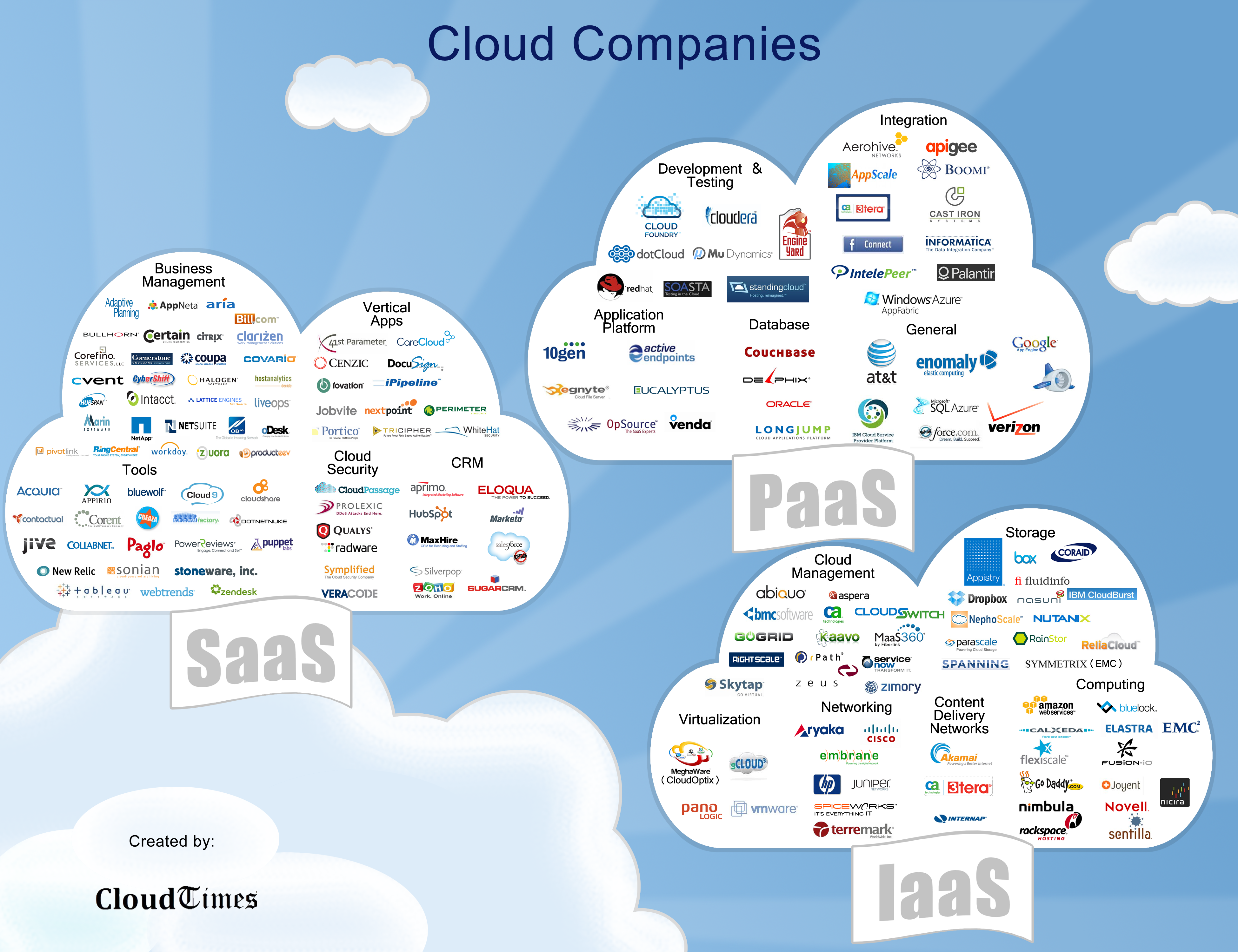
learning more about them. I found this graphic on cloudtimes.org which lists
quite a few cloud service companies separated by which model they belong to.

No comments:
Post a Comment